How to Stop Hitting Snooze (and What the Research Really Says)
If "five more minutes" has turned into thirty, you're far from alone. Here's what science says about snoozing, and how to finally get up on the first alarm.
 By the Tiko team 5 min read
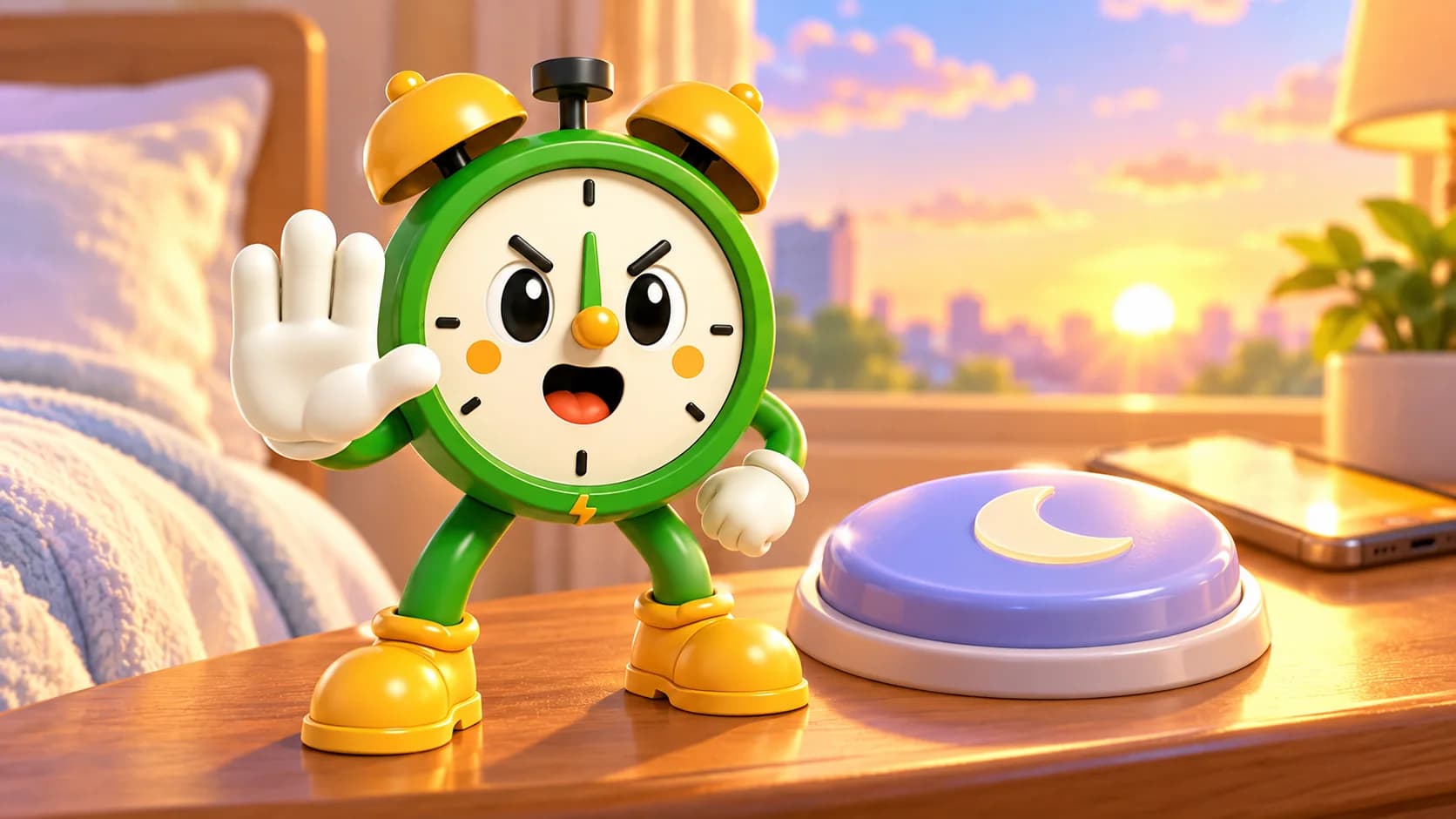
"Five more minutes" might be the most-said sentence in the world before 8 a.m. If you're a serial snoozer, you're in very good company.
When researchers analysed roughly 3 million nights of data from around 21,000 people using the Sleep Cycle app, about 56% of sleep sessions ended with a snooze. People spent an average of 11 minutes dozing between alarms, and the heaviest snoozers clocked around 20 minutes. Snoozing peaked on weekdays, and the U.S. was one of the snooziest countries in the study (Mass General Brigham).
So no, you're not uniquely weak-willed. But if snoozing leaves you rushed, late or groggier than you'd like, it's a habit worth changing.
Is hitting snooze actually bad for you?
Honestly? It's less clear-cut than the internet makes it sound.
A 2023 study from Stockholm University brought habitual snoozers into a sleep lab. Snoozing for 30 minutes didn't hurt their stress-hormone levels, mood or overall sleep, and right after getting up they actually did a little better on a couple of cognitive tests (PsyPost, on Sundelin et al., Journal of Sleep Research). The researchers were careful to note the limits: they only studied people who already snooze and fall back asleep easily, and only tested a single 30-minute snooze period.
On the other side of the ledger, the snooze habit tends to travel with things that aren't great. In the same research, habitual snoozers slept less on workdays and were much more likely to be evening types. And the sleep you get between alarms is light and broken up. That's why the lead researcher on the Sleep Cycle study recommends setting your alarm for the latest time you can and getting up when it first rings, rather than trading solid sleep for interrupted dozing.
The practical takeaway: an occasional snooze isn't a health crisis. But if you're hitting it three or four times every single morning, it's usually a sign you're not sleeping enough, or your alarm is set earlier than your body is ready for.
Why you keep hitting snooze
- You're short on sleep. The most common reason by far. A tired brain grabs every extra minute it can.
- Your body clock runs late. Night owls on early schedules are fighting their biology every single morning.
- You set a "fake" alarm. Setting the first alarm early on purpose, planning to snooze, trains you to treat it as optional.
- Snoozing is effortless. One tap on a big button, right by your hand. Of course you press it.
- Nothing is pulling you out of bed. If the first thing waiting for you is stress, staying under the covers is very tempting.
8 ways to stop hitting snooze
1. Set the alarm for your real wake-up time
If you need to be up at 7:00, set it for 7:00, not 6:30 "to allow for snoozing." You'll swap 30 minutes of broken dozing for 30 minutes of proper, continuous sleep.
2. Use one alarm, and mean it
Ten alarms five minutes apart teach your brain that the alarm is just background noise. One alarm, plus a single backup on important mornings, is plenty.
3. Put it out of arm's reach
The snooze button is dangerous because it's right there. Put your phone across the room so you have to stand up to reach it. Once you're on your feet, staying up is a lot easier.
4. Make dismissing the alarm take effort
A mission alarm won't stop until you solve a few equations, scan a code you've left in the kitchen, or do a handful of squats. By the time you've finished, you're awake enough to make a real decision instead of a reflex. Here's how the different mission types compare.
5. Limit snoozes, or remove them
If cold turkey sounds impossible, allow yourself one snooze and switch the rest off. Plenty of alarm apps let you cap the number of snoozes or shorten each one.
6. Add a small consequence
Habits change faster when skipping them costs something. In Tiko, an optional feature called Snooze Penalty temporarily blocks apps you choose, social media for example, when you hit snooze. "Five more minutes" becomes "five more minutes and no scrolling." It's opt-in, part of Tiko Pro, and needs the relevant device permissions on supported devices.
7. Get up into light
Open the curtains or switch on the main light as soon as you're up. Morning light helps move your body clock earlier over time, which makes future mornings easier too (NIOSH).
8. Fix the sleep problem underneath
If you're snoozing every morning, look at bedtime first. Adults need seven or more hours a night (AASM). Our guide to waking up early shows how to shift your schedule without a miserable first week.
If you genuinely love snoozing
Fair enough. If a few minutes of dozing is the cosiest part of your day, make it a choice rather than a reflex:
- Allow exactly one snooze, at a set length.
- Lie there with the light on instead of burrowing back under the covers.
- Make the second alarm the real one: out of reach, with a task to switch it off.
That way snoozing is something you decide to do, not something that happens to you.
Frequently asked questions
Why do I keep snoozing my alarm?
Usually because you're not getting enough sleep, your body clock runs later than your alarm, or snoozing is simply too easy. Setting one alarm at your real wake time and putting it out of reach tackles most of it.
Is it bad to hit snooze?
The research is mixed. A 2023 lab study found a 30-minute snooze didn't harm habitual snoozers' mood, stress hormones or overall sleep. But heavy snoozing often goes hand in hand with too little sleep, and dozing between alarms is light, broken sleep.
How many times should you hit snooze?
Ideally once at most. If you need several snoozes every day, treat it as a sign to go to bed earlier or set your alarm for your real wake-up time.
Why do I hit snooze in my sleep?
You wake just enough to press the button and fall back asleep before the memory sticks. Putting the alarm out of reach, or requiring a mission to dismiss it, makes that much harder.
Sources
- Mass General Brigham (2025). Don't hit snooze on new research about waking up each morning (Robbins et al., Scientific Reports)
- PsyPost (2023). Brief snooze periods might help alleviate drowsiness (Sundelin, Landry & Axelsson, Journal of Sleep Research)
- Watson et al. (2015). Recommended amount of sleep for a healthy adult. AASM & SRS
- NIOSH. Light and the body clock
This article is for general information and isn't a substitute for advice from a healthcare professional.
Keep reading
How to Wake Up Early (Even If You're Not a Morning Person)
A realistic plan to wake up early without feeling wrecked: shift your wake time slowly, protect your bedtime, use morning light, and make getting up automatic.
Why Do I Keep Sleeping Through My Alarm? 7 Causes and 9 Fixes
Sleeping through your alarm isn't laziness. The real reasons it happens, from sleep debt to sneaky phone settings, plus nine fixes that work for heavy sleepers.

Why Do I Wake Up Tired After 8 Hours of Sleep?
Waking up tired even after a full night? What's normal (hello, sleep inertia), the common causes of morning fatigue, what helps, and when to see a doctor.